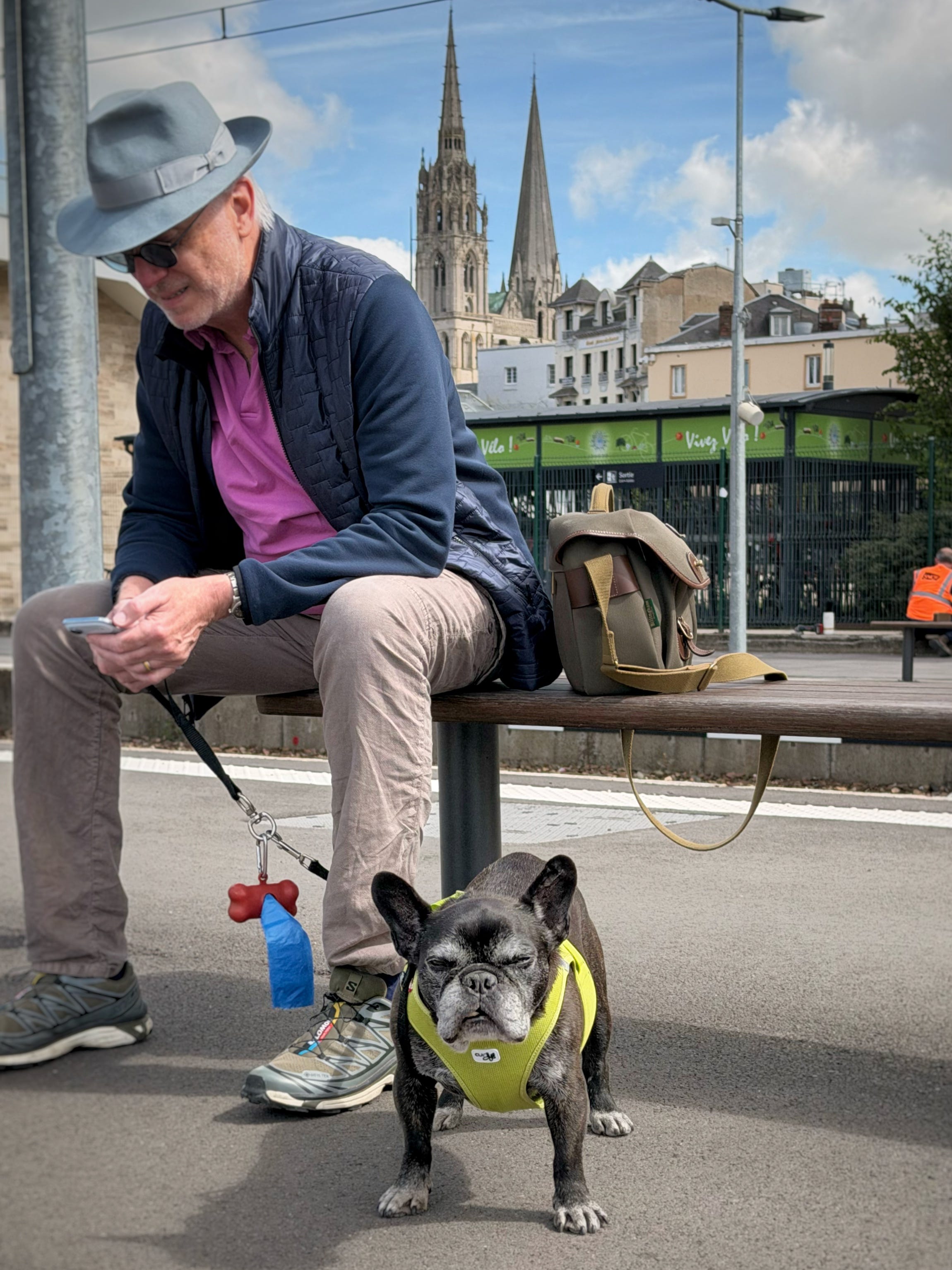
Episode 4: Chartres
The Day We Became Gothic Fanboys

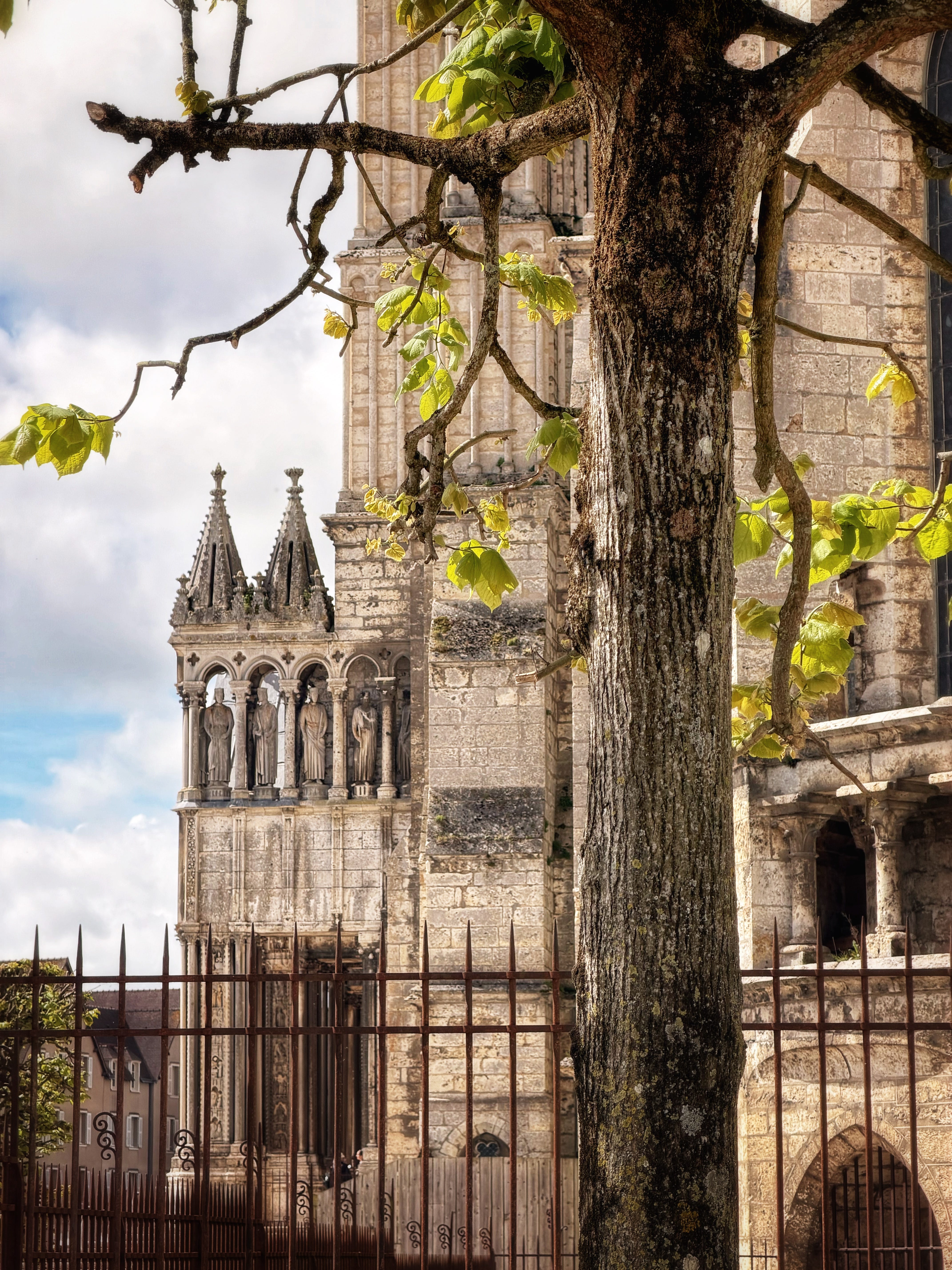
Readers of this blog will know that during last fall’s visit to Paris, Tom developed a bit of an obsession with photographing the city’s major churches. James remained unconvinced—but a game companion—as we paused during our wanders whenever Tom spotted a new nave worth exploring.
By the end of that trip, we had visited most of the major Parisian churches and cathedrals, and Tom—predictably—was already itching for more soaring vaults and ecstatic religious sculpture.
Sainte-Chapelle, that jewel box on the Île de la Cité, was unfortunately sold out (a casualty of spring crowds and our chronic under-planning), leaving Tom staring longingly at its spires from across the square.

We did visit the 17th-century Église Saint-Gervais–Saint-Protais, nestled in the medieval lanes on the Right Bank across from Île Saint-Louis, which had beautiful light and a host of remarkable angels. But Tom needed more.


So we cast our net beyond Paris.
We would go to Chartres.
Montparnasse, Part Deux
The plan offered a secondary benefit: confronting the demons of Gare Montparnasse.
This was the station that had nearly broken us on two prior occasions (see Episodes 15 and 17 for the full trauma), and since we would be traveling through it again en route to Brittany, this felt like the perfect low-stakes rehearsal—no luggage, just resolve.
We arrived via Metro, steeled with determination.
The morning commuter rush was in full force. One quickly learns: do not hesitate, do not drift, and under no circumstances pause in front of a moving Parisian commuter. They will simply continue through you without so much as a whispered pardon.
We managed a quick petit déjeuner before our platform was posted, then joined the flow—this time moving with it rather than against it. There was still the usual chaos: passengers disembarking in waves while others pressed forward to board, bodies converging in a choreography of near-collisions.
We hugged the very edge of the platform, protecting Viv from trampling while trying not to be pushed onto the tracks ourselves.


And yet—miracle of miracles—we made it onto the train.
Upper deck. Seats secured. With time to spare.
We had done it.
Chartres
The history of Chartres Cathedral is worth telling.
A sacred site since Roman times, by the Middle Ages it housed one of the most powerful relics in Christendom: the Sancta Camisia, believed to be the tunic worn by the Virgin Mary at the birth of Christ. Questioning this claim is not encouraged.
When the original cathedral burned in 1194, the relic was thought lost—until it was miraculously rediscovered, an event interpreted as divine intervention. The response was immediate and extraordinary.
Reconstruction began almost at once, and remarkably, the cathedral we see today was largely completed—not over centuries—but between 1194 and 1220.
That relic, it turns out, was quite the fundraising tool.
Gradual Revelation
Arriving by train offers the perfect introduction.
You ascend slowly toward the hilltop, catching glimpses of the cathedral’s spires between buildings—teasing, partial views—until suddenly you emerge into an open square and there it is:
Massive. Asymmetrical. Fully revealed.
Unlike the great churches of Paris, which are hemmed in by dense urban fabric, Chartres stands apart—its Gothic grandeur allowed to breathe, uninterrupted on the flat hilltop, against the sky.


The Visit, in Shifts
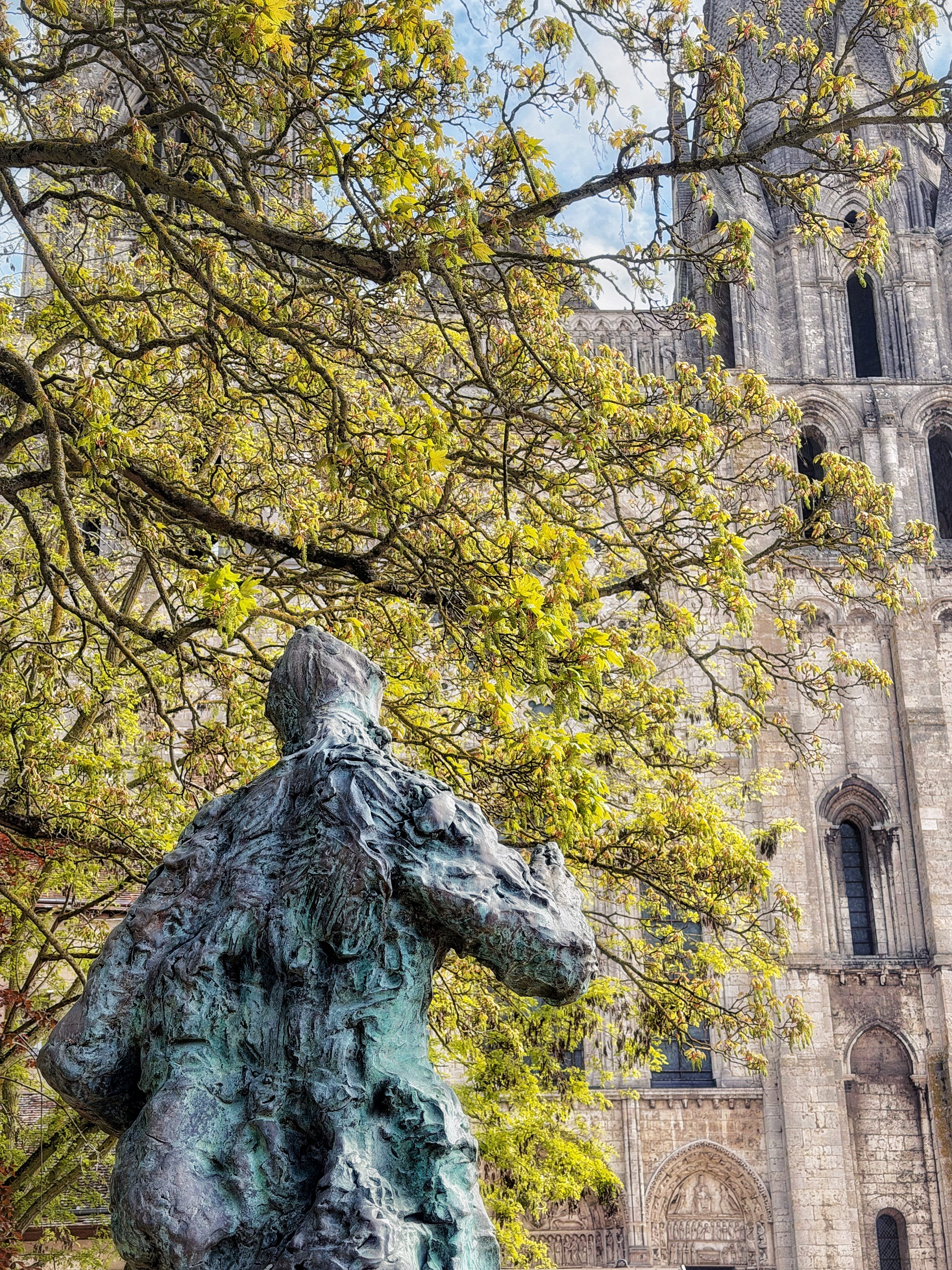
We took turns going inside while the other remained outside with Viv, stationed on a shaded bench in the square, next to a modern abstract statue that stands in lively conversation with the cathedral’s west façade.
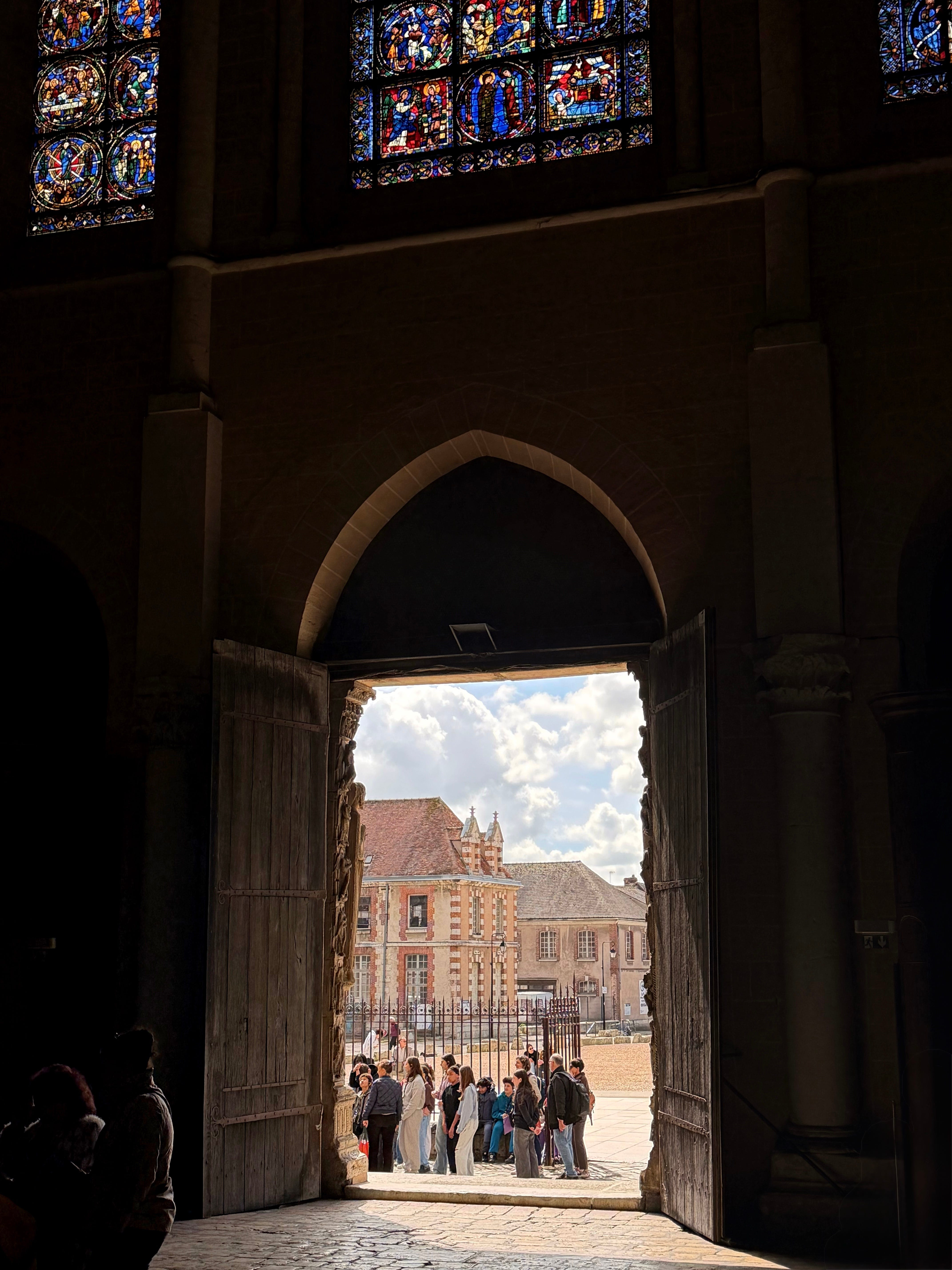
Inside, restoration was underway. Scaffolding rose floor to ceiling along one side of the nave, partially obscuring the great organ. The sound of hammering echoed through the vast interior—an accidental but fitting reminder that this building has never truly been “finished.”
It exists in a constant state of renewal.
The interior presents a striking contrast: sections of darkened, soot-stained stone alongside expanses of newly cleaned, luminous surfaces that hint at how the cathedral would have appeared when first completed.


The space itself is overwhelming and yet incredibly intimate. You stop trying to photograph it at some point. You just stand there, looking left, looking right, looking up.
Vaults soar. Light filters through stained glass with an almost liquid quality. And along the choir screen, sculpted figures—some intact, others bearing the scars of Revolutionary defacement—tell their stories in stone. Visitors wander, the sound of shuffling feet and the occasional whisper reverberating through the vastness.


The main altar, framed by soaring stained glass and anchored by a dynamic Baroque sculpture, doesn’t require devotion—but it commands awe through form, height, and color.


Circumnavigation: The Portals
Outside, we circled the cathedral slowly.
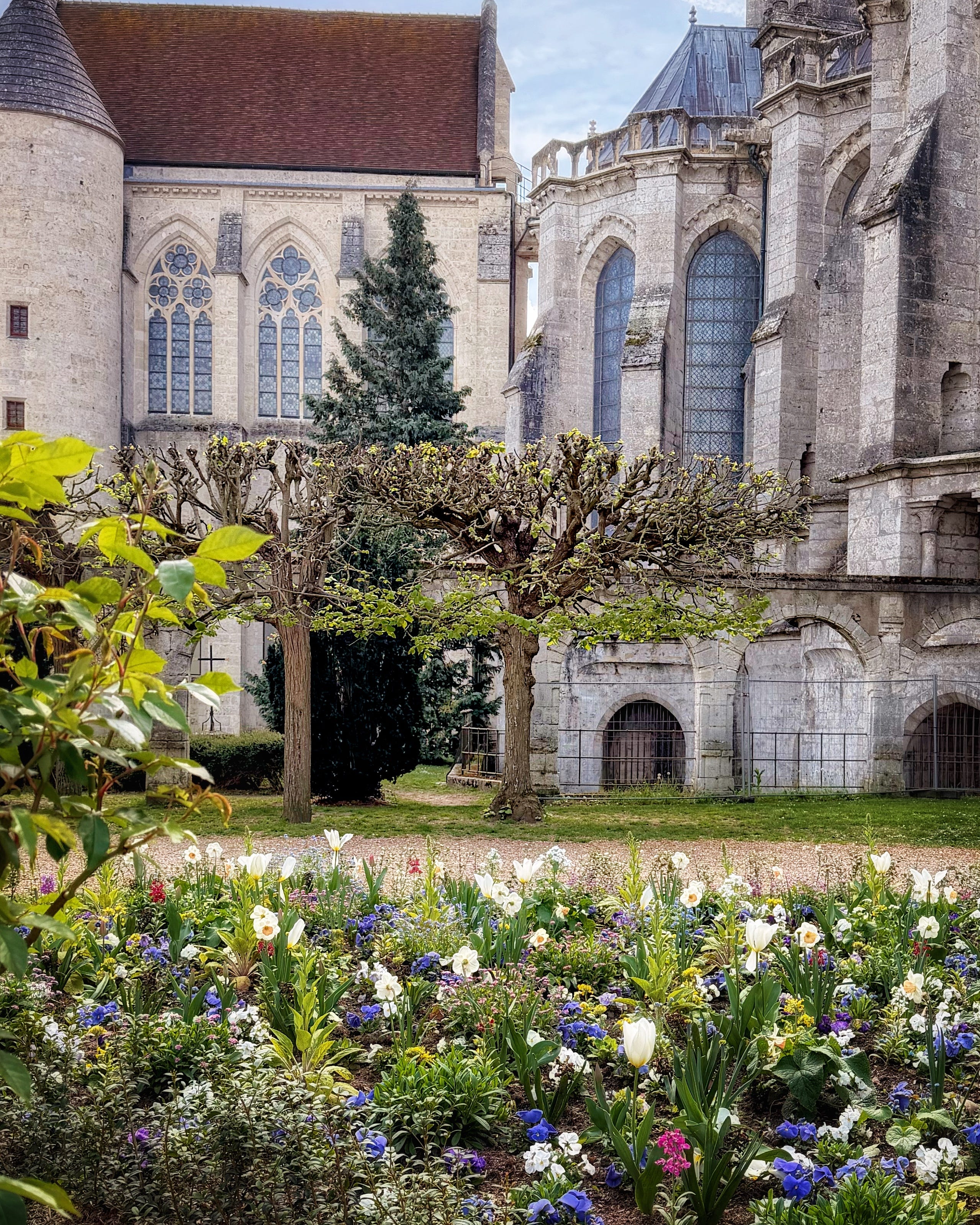
The mismatched spires tell their own story: the north tower rebuilt after a lightning strike in a more elaborate High Gothic style, standing in contrast to its simpler counterpart—a history that results in a remarkably beautiful asymmetry.


The transept portals—north and south—are masterpieces.
The South Portal presents Christ as teacher and judge, surrounded by apostles and martyrs. At first, it’s the scale that overwhelms—vertical mass, arching symmetry, repetition—like a chant. But then the details emerge: a face, a gesture, the fold of a garment caught in motion. Awe gives way to discovery, which becomes intimacy.


The North Portal, dedicated to the Virgin, feels different—softer, more luminous. The same progression unfolds, but the emotional register shifts. The stone seems to invite you closer into a warm, glowing embrace.


Architecture, here, is not static. It moves you.
Time to Eat
All that Gothic immersion created a corresponding appetite.
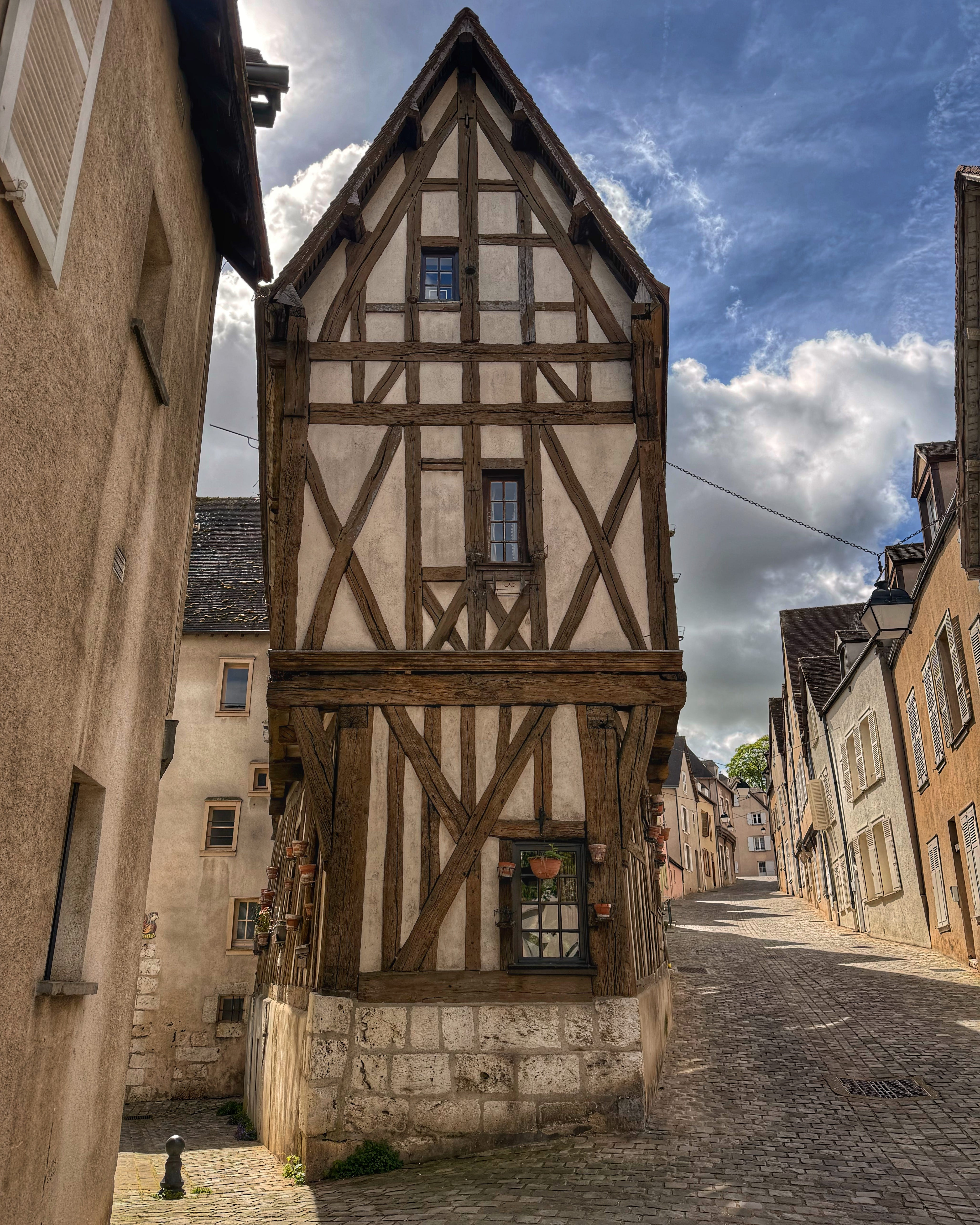
We wandered down into the old town, which spills along the hillside below the cathedral, and found lunch at a small riverside restaurant, Les Feuillantines.
Chilled pea soup with salted ham.
Tartare de bœuf.
A glass of red from Provence.
From there, a gentle stroll along the Eure before making our way back uphill—Viv lagging, as usual, in the sun.
We even made one final stop at Église Saint-Aignan, a small 12th-century parish church with a barrel-vaulted nave and walls covered in fading painted decoration—peeling, worn, and somehow warmer for it.


A different kind of beauty.
Departure
Before leaving, Tom made one final pass through the cathedral in the late afternoon light.
Then it was back down the hill to the station.
As we waited on the platform, the cathedral still visible in the distance, we felt that rare and satisfying combination: tired, and entirely fulfilled.
The ride back to Paris was smooth.
And when we arrived at Montparnasse, we realized something important.
The station hadn’t changed.
We had.
🐾
Vivian’s Dispatch — Chartres
16 April 2026
If there was one mercy to the day, it was this: they did not make me walk to Chartres.
We traveled by train—a mode of transport I find entirely acceptable—though the stations themselves remain hazardous environments, filled with people who move as if consequences do not apply.
At the cathedral, I was, once again, not permitted inside.
I have adjusted my expectations accordingly.
Instead, I took up my position on a shaded bench and conducted surveillance of the surrounding activity, interspersed with brief investigative forays into the local shrubbery.
Lunch, I am pleased to report, was conducted indoors.
I was provided with spring water in a porcelain bowl—civilized—and rewarded with a modest allocation of frites, which I accepted.
And yet.
There was, inevitably, a hill.
In the sun.
On stone.
This, dear Reader, appears to be a fixed feature of their travel philosophy.
But rest assured:
My fortitude remains intact—
as does my appetite
which was later sated by a bowl of my kibbles, consumed with my usual gusto.